

Global Anti-Counterfeiting Sprint with CLDP: Forging a Guidebook
The Commercial Law Development Program (CLDP) of the U.S. Department of Commerce is tasked with advancing legal frameworks and empowering enforcement officials worldwide. When CLDP needed to produce a comprehensive field manual to combat the illicit trade of counterfeit goods, they recognized that traditional, protracted drafting processes would not suffice. Instead, they turned to Book Sprints’ structured methodology of collaborative guidebook writing.
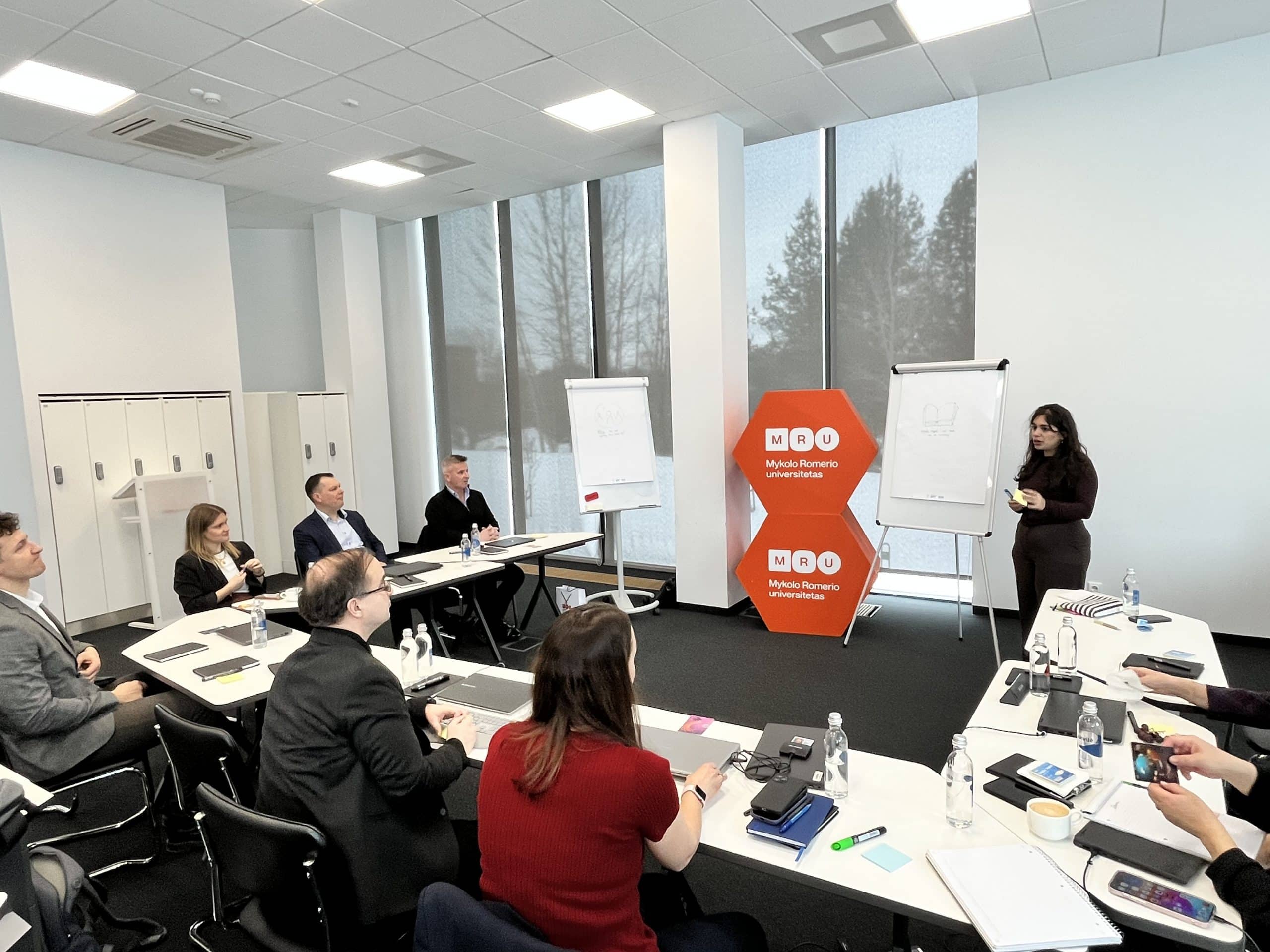
Hosting a Book Sprint in a snowy Lithuania from February 23 to 27, 2026, CLDP brought together a distinguished panel of global experts to successfully accelerate this timeline. A special thanks is owed to our host, Mykolas Romeris University, whose venue and logistics support allowed us to complete the drafting of this handbook. As the snow fell outside, the university provided a warm, focused environment for our team and generously opened its doors to aspiring law students for a discussion on the American legal system through a seminar led by Sprint participant Judge Choe-Groves. Beyond the ironic post-sprint laugh, this week-long collaborative writing marathon resulted in a highly impactful resource: STOP COUNTERFEITS: A Practical Guide.
Equipping the Frontlines Against Illicit Trade with Collaborative Guidebook Writing
The global trade in counterfeit goods is an expansive illicit industry that funds organized criminal networks, distorts legitimate trade, and severely compromises consumer health and safety. To address these systemic threats, CLDP required a “one-stop” action guide tailored specifically for frontline enforcement officials, including judges, police, customs agents, and border patrols.
Rather than producing a dense academic textbook, the objective of this collaborative guidebook writing session was to create a streamlined, engaging resource with a regional focus on Eurasia, encompassing Central Asia, the Caucasus, and Eastern Europe.
To achieve this, the project assembled a diverse authoring group: two CLDP representatives, a U.S. international court judge, IP lawyer from the Department of Justice (DOJ), a brand representative from Puma, an academic professor, an independent IP enforcement consultant and two experts from React, a non-profit anti-counterfeiting network. This strategic composition ensured the final document was both technically robust and practically applicable for its target audience.

CLDP Anti-counterfeiting Sprint Participants
Navigating Asynchronous Workflows and Specialized Depth
This specific exercise in collaborative guidebook writing required the team to overcome two primary hurdles: managing specialized depth and synchronizing global time zones.
First, mitigating the “curse of knowledge” was essential. When highly specialized professionals convene, early drafts frequently become overly detailed, leading to duplicated information across sections, and little accessibility for the target readership. The facilitation process required guiding the authors to maintain a strategic focus, eliminating redundancies, and ensuring the text remained accessible for frontline workers who may lack advanced, specialized IP backgrounds.
Second, the project demanded rigorous logistical coordination. While the core team drafted the manuscript in-person, a secondary team of three experts from U.S. Customs and Border Protection (CBP) contributed remotely from U.S.time zones. Grounded by a government shutdown, this team was unable to travel, but our Book Sprints facilitator quickly adapted to keep them fully integrated from afar. Because the manuscript functioned as a dynamic document, the in-person team frequently integrated new content generated overnight by the U.S. team. Synthesizing these asynchronous updates required meticulous version control, comprehensive chapter comparisons, and structured communication to ensure all expert voices were harmoniously woven into the final text without the benefit of face-to-face debate.
 Snowy Mykolas Romeris University, Lithuania




Delivering a Unified Global Framework
Despite the complexities of aligning remote contributions and deep technical expertise, the Sprint concluded with a cohesive and authoritative handbook.
A significant advantage of this collaborative guidebook writing process was the cross-pollination of professional insights. It is rare for DOJ counsel, corporate brand representatives, and NGO networkers to co-author a single policy document. Through this environment, participants gained an understanding of each other’s operational challenges and enforcement perspectives. Furthermore, the team successfully balanced the U.S. and E.U. enforcement methodologies, tailoring these combined insights to address the legal and practical realities of the target regions.
The urgency of this work was underscored immediately after the Sprint concluded. While gathering locally on Friday evening to celebrate the Sprint’s completion, the authoring team spotted a patron wearing a blatant counterfeit t-shirt of the exact sports brand represented by one of their co-authors. This ironic encounter served as a real-world reminder of the pervasive nature of illicit trade and the immediate need for robust enforcement tools.
The resulting publication, STOP COUNTERFEITS: A Practical Guide, is positioned to make a substantial impact on global trade enforcement. CLDP plans to publish the manual, translate it into multiple languages, and distribute physical copies to international organizations and enforcement agencies globally.
By utilizing expert facilitation and dedicated teamwork to open the year, this Sprint proved that collaborative handbook writing can be achieved with speed and precision, delivering a vital tool to combat illicit trade.
Contact us today at contact@booksprints.net to learn how we can guide your organization through your own Book Sprint.